Roofing Dumpster Guide: Sizes, Weight Limits & What to Know Before Renting
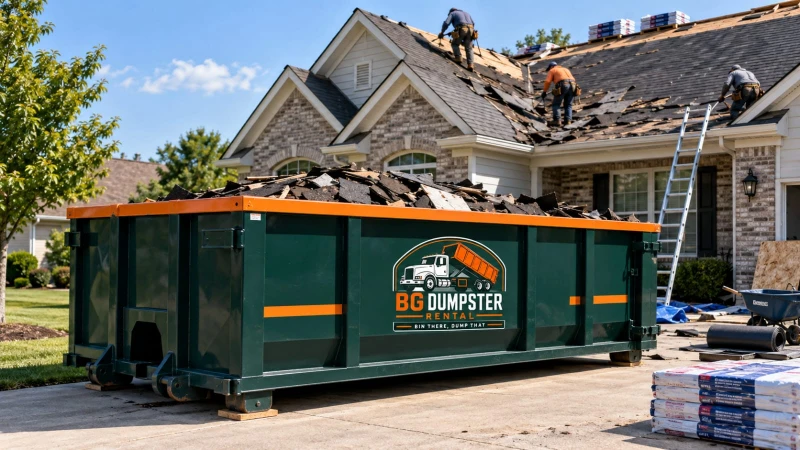
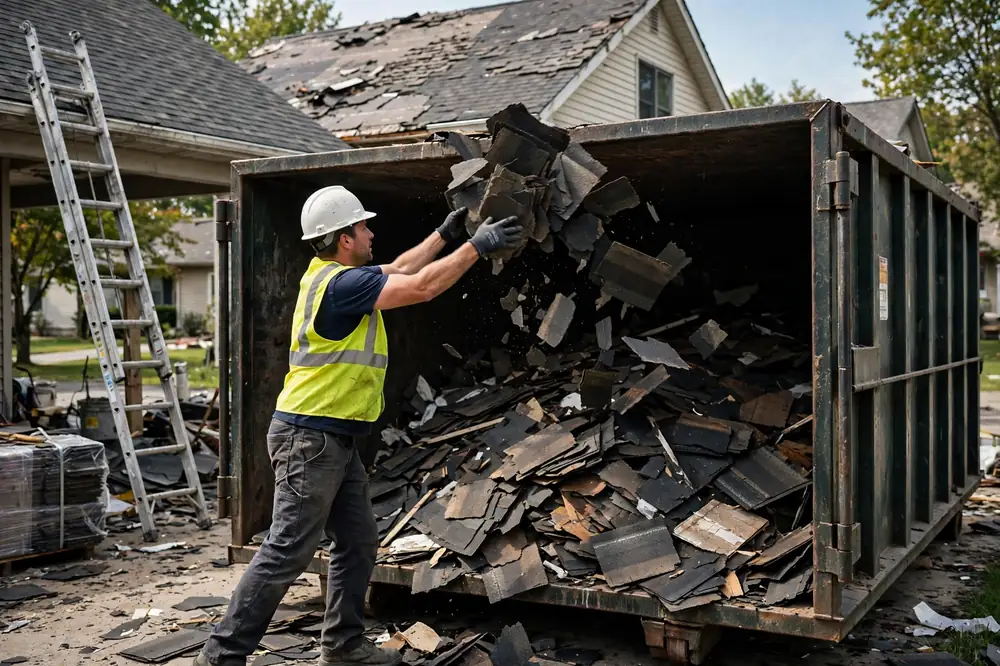
Tearing off a roof produces one of the heaviest kinds of debris a homeowner or contractor will ever deal with. It doesn’t look like much on the ground, but a stack of old shingles can weigh more than a small car. That’s the part most people underestimate when renting a dumpster for a roofing job, get the size or weight allowance wrong and you’re either paying overage fees or waiting on a second container mid-project. This guide walks through what actually goes into choosing a dumpster for roofing debris, whether you’re re-roofing a home in Bowling Green, Franklin, or Scottsville.
Roofing Squares & Dumpster Size Chart
Roofing debris is measured in “squares” — one square equals 100 square feet of roof. But weight, not just volume, is what actually limits how much shingle debris a dumpster can hold. A single roofing square commonly weighs 230 to 430 pounds depending on shingle type, so a dumpster that looks a third full can already be at its weight limit.
Here’s how squares and weight roughly break down by dumpster size:
Dumpster Size
Roof Size (Squares, Single Layer)
Approx. Shingle Weight
Squares (Double Layer)
Best For
10 Yard
Up to 10 sq
~1–1.5 tons
Up to 5 sq
Small repairs, sheds
15 Yard
10–20 sq
~1.5–3 tons
5–10 sq
Single-layer mid-size roofs
20 Yard
20–30 sq
~2.5–4.5 tons
10–15 sq
Most residential tear-offs
30 Yard
30–40+ sq
~4.5–6 tons
15–20 sq
Large or multi-layer roofs
These numbers can shift slightly between providers, so always confirm the exact dimensions and weight limit when you book.
Why Roofing Debris Gets Heavy So Fast
This is the part that catches people off guard. A dumpster that looks a third full can already be at its weight limit. A typical 2,000 sq ft roof works out to about 20 squares, which can put shingle weight alone in the range of a couple of tons before anything else is added. Tearing off multiple layers roughly multiplies that weight, it doesn’t just add more volume. Two layers of shingles from the same roof area will weigh close to double what one layer weighs, even though the pile doesn’t look twice as big.
5 Factors That Affect Dumpster Selection
Picking a dumpster isn’t just “how much stuff do I have.” A few other factors decide whether a size that looks right on paper actually works for your job.
1. Roof Size (Measured in Squares)
A roofing square equals 100 square feet of roof. Your roofing contractor will usually already know your roof’s square footage, that number is the starting point for sizing your dumpster correctly.
2. Number of Shingle Layers Being Removed
Tearing off multiple layers roughly doubles the weight, not just the volume. A lot of homes have two layers of shingles from a past re-roof, so confirm this with your roofer before booking.
3. Shingle Type
Architectural (dimensional) shingles weigh meaningfully more than 3-tab, roughly 400–430 lbs per square versus 230–250 lbs. Knowing which type is coming off your roof changes the weight math significantly.
4. Roof Complexity
More valleys, hips, and cuts mean more waste from trimming, sometimes 5–10% extra. A simple roof with few angles produces less scrap than a complex one.
5. The Container’s Actual Weight Limit
Every rental comes with a weight allowance, not just a size. Ask your provider what the allowance is and what the overage rate is per ton before you book, not after pickup.
How Much Do Shingles Actually Weigh?
This is the part most guides skip, and it’s usually where people get stuck. Here’s a closer look at how different roofing materials stack up.
Roofing Material Weight Chart
Shingle Type
Weight Per Square (100 sq ft)
3-Tab Asphalt (single layer)
230–250 lbs
Architectural Asphalt (single layer)
400–430 lbs
3-Tab Asphalt (2 layers)
460–500 lbs
Architectural Asphalt (2 layers)
800–860 lbs
Slate Shingles
800–1,000 lbs
Roofing Felt / Underlayment
16–27 lbs
Wood Decking (plywood sheet)
40–70 lbs
Metal Roofing Panels
50–150 lbs
A few things push weight up further: wet or rain-soaked shingles absorb moisture and weigh more, rotten decking replaced during tear-off adds to the load, and complex roofs with more cuts and valleys mean more waste from trimming.
3 Steps to Estimate What You’ll Need
Confirm your roof size in squares. Your roofing contractor will usually know this already, or you can measure and divide the total square footage by 100.
Find out the shingle type and number of layers. Architectural shingles weigh more than 3-tab, and each additional layer roughly doubles the weight, not the volume.
Add a buffer for waste, then share it all with your provider. Complex roofs with more valleys and cuts produce 5–10% extra waste. Give your dumpster provider the full picture so they can match equipment to your job’s actual weight.
Not Sure? Use Our Dumpster Size Calculator
If you’d rather skip the math, plug your roof’s square footage into our Dumpster Size Calculator below and it’ll point you to the right container, no guesswork needed.
Roofing Squares by Roof Size
Here’s how most Bowling Green-area projects line up with our sizes.
Small Roofs (Under 20 Squares) — 10 to 15 Yard
Single-layer tear-off on a small roof: Lighter overall, but still dense enough to fill weight allowance before the bin looks full.
Partial re-roof or repair section: Good fit when only part of the roof needs new shingles.
Detached garage or shed roof: Small footprint, straightforward single-layer tear-off.
Medium Roofs (20 to 30 Squares) — 20 Yard
Standard home, single layer: A typical 2,000 sq ft roof at one layer of asphalt shingles.
Multi-layer tear-off on a smaller roof: Two layers on a modest roof can weigh as much as one layer on a bigger one.
Architectural shingle single-layer tear-off: Heavier per square, so the same roof size needs more weight allowance.
Large Roofs (30 to 40+ Squares) — 30 Yard
Large or multi-story home tear-off: More total squares means more total weight to plan for.
Multi-layer tear-off on a larger home: Combines high square footage with doubled weight.
Roofing plus decking replacement: Rotten decking swapped out during tear-off adds extra weight on top of shingles.
If your project doesn’t fit neatly into one of these, give us a call — we’d rather walk you through it over the phone than have you guess and end up short.
How Long Can You Keep a Roofing Dumpster?
Rental periods vary by provider and are usually set in the rental agreement, with options to extend if the project runs longer. A single-day tear-off and reroof needs far less time than a job with weather delays or a decking replacement. Confirm the included rental window and any extension costs when booking.
What Can Go Into a Roofing Dumpster
Most rental providers accept the following roofing-related materials, though acceptance can vary by provider and local disposal facility.What’s Accepted
Asphalt shingles (any type)
Roofing felt and underlayment
Roofing nails and small amounts of metal flashing
Wood or plywood decking removed during tear-off
Gutters, in most cases
What’s Typically Excluded
Wet paint, hazardous chemicals, and solvents
Tires and batteries
Appliances with refrigerant
Large amounts of loose insulation (check with your provider)
Anything your local disposal facility flags as hazardous
If you’re not sure where something falls, run it through our What Can I Throw Away Checker before loading day. It takes the guesswork out and saves you a phone call.
Common Mistakes to Avoid
Sizing based on volume alone. Weight, not volume, is the real limiting factor for roofing debris.
Not accounting for multiple shingle layers. Two layers roughly double the weight, not just the volume.
Mixing in prohibited materials. Check with your provider before loading anything you’re unsure about.
Overloading past the fill line. This can lead to rejected pickups, safety issues, and overage fees, so book ahead during busy roofing seasons.
Placement and Site Access
Roofing debris usually comes off the roof in a fairly direct line, so where the dumpster sits matters more here than on a typical cleanout. Most residential rentals go straight into the driveway, which usually means no permit is required. If the dumpster needs to sit on the street instead, check with your local city office first, rules vary by municipality.A few placement details worth thinking through before delivery:
Driveway or surface type: some surfaces need protective boards under the container.
Clearance for delivery and pickup trucks, including overhead branches or low wires.
Distance from the work area, since shorter carry distances mean faster, safer loading for the crew.
COMMON QUESTIONS
Frequently Asked Questions
It depends on your roof’s square footage, the number of shingle layers being removed, and shingle type, since weight limits matter as much as volume. Sharing those details with your provider is the most reliable way to land on the right size.
Yes, standard roll-off dumpsters are commonly used for shingle disposal — there’s no separate ‘shingle-only’ container type. The key difference is being mindful of the weight limit rather than just the size.
Often yes, including wood decking and roofing-related materials, but this can depend on the provider and local disposal rules. It’s worth confirming what else can go in alongside the shingles.
Only if it’s placed somewhere other than private property, like a street or public right-of-way — rules vary by city and county. Check with your local permitting office if you’re not placing the dumpster entirely on your own driveway or lot.
A roofing square (100 sq ft) of asphalt shingles typically weighs between 230 and 430 pounds, depending on whether they’re 3-tab or architectural. A full roof’s worth of shingles can add up to a couple of tons or more.
Rental periods vary by provider and are usually set in the rental agreement, with options to extend if the project runs longer. Confirm the included rental window and any extension costs when booking.
Most providers charge an overage fee per ton beyond the included weight allowance. This is the main reason accurately estimating shingle weight upfront saves money later.
Not Sure What Size You Need for Your Roof? We’ll Help You Decide
Tell us your roof’s square footage and shingle layers, and we’ll match you to the right container. No hidden fees, straight pricing every time.
A standard dumpster rental in Bowling Green covers up to 14 days at one flat price. Here’s how long common projects take and what to do if your job runs long.
In Bowling Green, KY, renting a dumpster typically costs between $269 and $572, depending on the size you need, how heavy your debris is, and how long you keep it. A small 10-yard dumpster for a garage cleanout sits at the low end of that range, while a 30 or 40-yard container for a construction…
What Size Dumpster Do I Need? A Bowling Green Homeowner’s Guide to Choosing the Right Roll-Off Size Renting a dumpster sounds simple until you’re standing in your driveway trying to guess how much your garage cleanout is actually going to fill. Get the size wrong and you’re either paying for empty space you didn’t need,…
Do you need a permit for a dumpster in Bowling Green, KY? Driveways need no permit; street placement needs the city’s $75 Right-of-Way permit. Here’s how it works.