
Home / Heavy Debris Dumpster Rental
Heavy Debris Dumpster Rental in Bowling Green, KY
Dumpsters for concrete, brick, dirt, rock and asphalt in Bowling Green and Warren County, with a weight guide, sizing help and 811 tips.
Tearing out a patio, breaking up a driveway or hauling off a pile of dirt? Heavy material needs a different plan than household junk. BG Dumpster Rental delivers roll-off dumpsters for concrete, brick, rock, dirt and asphalt to homes and job sites across Bowling Green and Warren County.
Call (270) 342-4646. Tell us what you are removing and roughly how much, and we will recommend the right container and quote it on the phone.
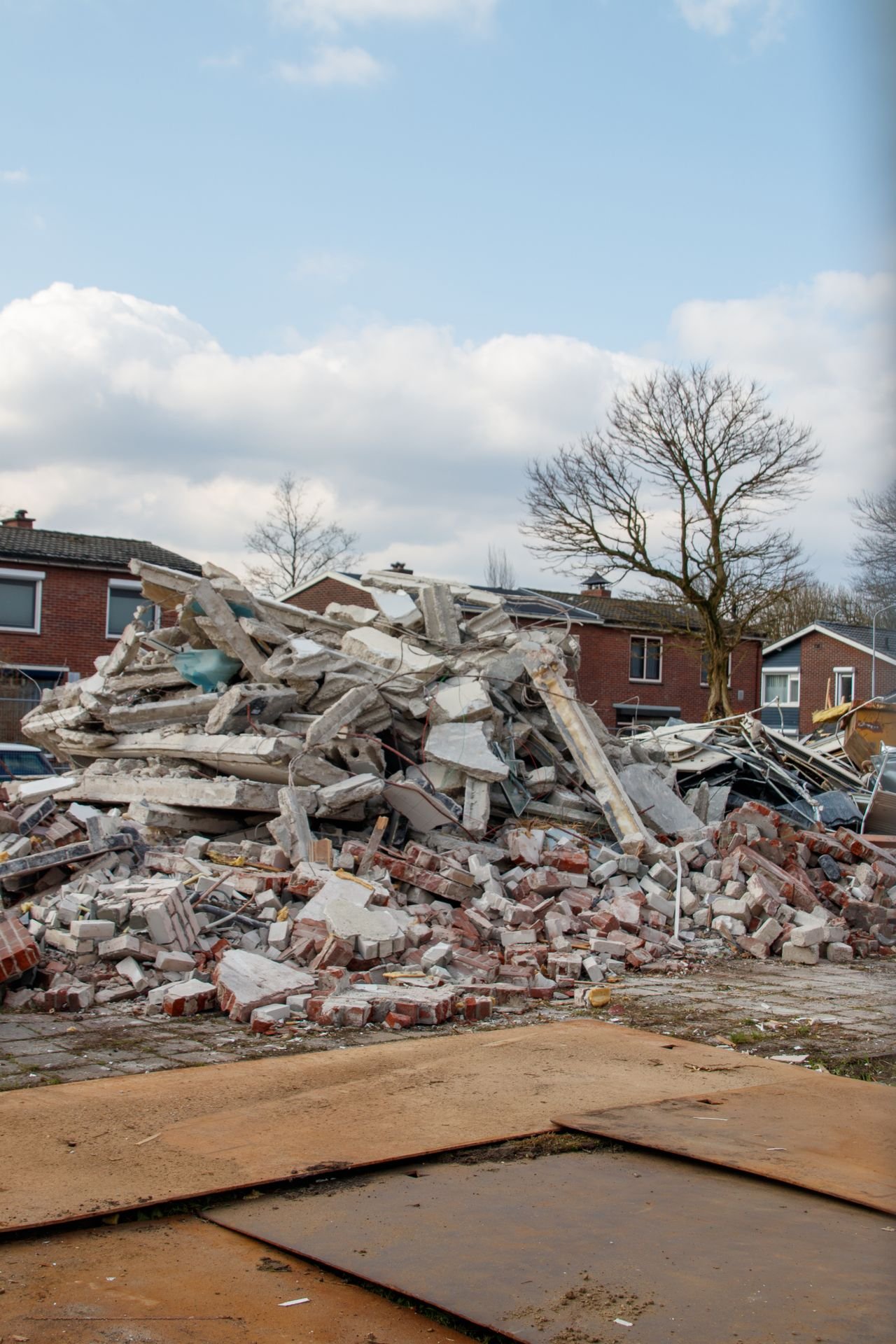
What Counts as Heavy Debris
- Concrete: patios, walkways, driveways, steps, footers and slabs
- Brick, block and stone, including old chimneys and retaining walls
- Dirt, soil and clay from excavation or landscaping
- Rock and gravel
- Asphalt from driveways and small paved areas
- Pavers and landscape stone
- Ceramic and porcelain tile (in large quantities)
Why Heavy Debris Needs Its Own Plan
With most junk, a dumpster fills up by space. With heavy debris, it fills up by weight first. Concrete, brick and dirt are so dense that a container can reach the most it can safely carry long before it looks full.
How much does heavy debris weigh?
The figures below come from published volume-to-weight conversion factors used by the U.S. EPA and state recycling agencies. They are for loose, broken material, which is how debris usually ends up in a dumpster.
| Material (loose) | Approximate weight per cubic yard | Source |
|---|---|---|
| Brick, whole | 3,024 lb | California CIWMB factors |
| Soil, dry | 2,025 lb | California CIWMB factors |
| Concrete, scrap, loose | 1,855 lb | Tellus Institute, in EPA-based state tables |
| Asphalt paving, crushed | 1,380 lb | Tellus Institute, in EPA-based state tables |
| Commingled construction debris (for comparison) | 1,200 lb | U.S. EPA |
Solid concrete is heavier still. The EPA lists the density of concrete at about 4,000 lb per cubic yard. Wet dirt and clay also weigh more than the dry soil figure above.
What that means for a dumpster
- A 10 yard dumpster full of loose broken concrete would weigh about 18,550 lb, or roughly 9.3 tons.
- A 20 x 10 foot patio slab, 4 inches thick, is about 2.5 cubic yards of solid concrete. At about 4,000 lb per cubic yard, that is roughly 9,900 lb, or about 4.9 tons, before it is even broken up.
That is why heavy material is usually loaded into a smaller container and only partly filled. When you call, we will tell you how high to fill the container for the material you have.
Choosing a Size for Heavy Debris
| Size | Use for heavy debris? | Why |
|---|---|---|
| 10 yard | Yes, this is the right choice for most heavy loads | Its smaller size keeps a load of concrete, brick or dirt within a weight the truck can safely haul. |
| 15 yard | Only for small amounts, ask first | Can work for a partial load of heavy material, filled well below the top. Confirm on the call before loading. |
| 20 yard | Not for heavy material alone | A 20 yard filled with concrete or dirt would be far too heavy to haul. Use it for the lighter, bulky debris on the same job. |
| 30 and 40 yard | No | These large containers are built for light, bulky debris only. Never load concrete, brick or dirt into them. |
If your project mixes both, such as tearing out a patio and cleaning out a garage at the same time, the usual answer is two containers: a 10 yard for the heavy material and a 20 yard for everything else. Our Dumpster Size Calculator can help you think it through, and our construction dumpster rental page covers mixed job-site debris.
Keep Heavy Loads Clean
Heavy debris loads work best when they contain only the heavy material. Keep these out of a concrete, brick or dirt load:
- Wood, lumber and roots
- Drywall and insulation
- Household trash, bags and packaging
- Metal, other than small pieces of rebar or wire mesh in concrete (ask first)
If you are not sure whether something belongs in the load, ask before you toss it in.
Common Heavy Debris Projects
Patio, walkway and driveway removal
Breaking out an old slab is one of the most common heavy debris jobs. Measure the length, width and thickness before you call. Those three numbers let us estimate the weight and how many loads it will take.
Landscaping and grading
Digging out a garden bed, leveling a yard or removing a hill of soil produces a surprising amount of dirt. Tell us whether it is dry soil, wet clay or mixed with rock.
Brick, block and stone demolition
Old chimneys, brick steps, block walls and stone borders are dense and heavy. They belong in a 10 yard container on their own.
Footer and foundation work
Excavation, footers and small foundation repairs create dirt and broken concrete at the same time. Plan for heavy loads from the start.
Asphalt and paver removal
Small asphalt driveways, parking pads and paver patios can be removed into a 10 yard container. Let us know the square footage when you call.
Before You Dig or Break Up Concrete: Call 811
Removing a slab, a footer or a buried walkway often means digging. Kentucky’s call-before-you-dig law requires excavators to notify the state’s one-call center before digging. Here is what to know:
- Dial 811 (or 800-752-6007 from outside Kentucky) to reach the Kentucky 811 one-call center.
- Give at least two full working days’ notice before you start digging.
- Private lines are not marked. Utility companies mark their own lines, but private lines such as a sprinkler system, a line to a detached garage or a private well usually are not. You may need a private locator for those.
- Respect the marks. Hand-dig near marked lines.
A quick 811 call protects you from hitting a gas, power or water line, and it is the law.
Placement Tips for Heavy Loads
A loaded heavy debris container puts a lot of weight on a small area. A few precautions help protect your property:
- Place it on a firm, level surface. A concrete or well-packed gravel driveway is best. Avoid soft lawns, septic areas and fresh asphalt.
- Protect older or decorative driveways. Boards under the container can help spread the load.
- Know your ground. Bowling Green sits on karst terrain, and the city has 24 documented caves. If you have ever seen a dip, sinkhole or settling spot on your property, keep the container away from it and mention it when you call. The City of Bowling Green Public Works department takes sinkhole reports at (270) 393-3628.
- Plan the truck’s path. The truck needs a clear, firm route in and out, free of overhead lines and low branches.
- Load evenly. Spread heavy material across the floor of the container instead of piling it at one end.
Permits
A dumpster on your own driveway or private lot does not usually need a permit. If the container needs to go on a public street or other city right-of-way in Bowling Green, the city requires a right-of-way permit for any dumpster placed there, and the application should be made at least five days ahead. See our guide to dumpster permits in Bowling Green.
Removing a large slab, foundation or structure may also require a building or demolition permit. Inside city limits, contact the City of Bowling Green Neighborhood & Community Services at (270) 393-3615. Outside the city, contact Warren County Building Services at (270) 843-5360.
What Cannot Go in a Heavy Debris Dumpster
- Asbestos-containing material, including some old siding, tile and pipe insulation
- Contaminated soil, such as soil soaked with fuel or oil
- Tires
- Paint, solvents and chemicals
- Motor oil and fuel
- Car batteries
- Any hazardous waste
See our What Can I Throw Away Checker for more items.
How It Works
- Call (270) 342-4646. Tell us the material (concrete, brick, dirt, rock or asphalt), the measurements or rough amount, and your address.
- Get the right container. We will recommend a size and tell you how high to fill it for your material.
- Load it evenly. Keep the load clean and below the fill height we give you.
- Call for pickup. We haul it away. If you have more material, ask about a second load.
Our standard rental is 14 days. For larger demolition or grading jobs, tell us your timeline when you book. Our Rental Duration Estimator can help you plan.
Areas We Serve
We deliver heavy debris dumpsters throughout Bowling Green and Warren County, plus nearby communities including Franklin, Scottsville, Russellville, Glasgow, Morgantown, Smiths Grove, Oakland, Auburn, Brownsville, Richardsville, Alvaton, Woodburn, Plum Springs, and Rockfield. See all our service areas.
Heavy Debris Dumpster FAQs
Get a Heavy Debris Dumpster Delivered
From a small walkway to a full driveway tear-out, one call gets the right container on the way. Call (270) 342-4646 and tell us what you are removing.